
For sales teams, making calls is only one part of the process. The way calls are organized, paced, monitored, and handled can have a major impact on how efficiently a team works.
When agents spend too much time waiting for calls to connect, listening to unanswered lines, or manually dialing numbers, valuable working time can be lost.
Predictive dialers help automate much of this process. They use intelligent call pacing and automated call handling to help sales teams spend more time on productive conversations.
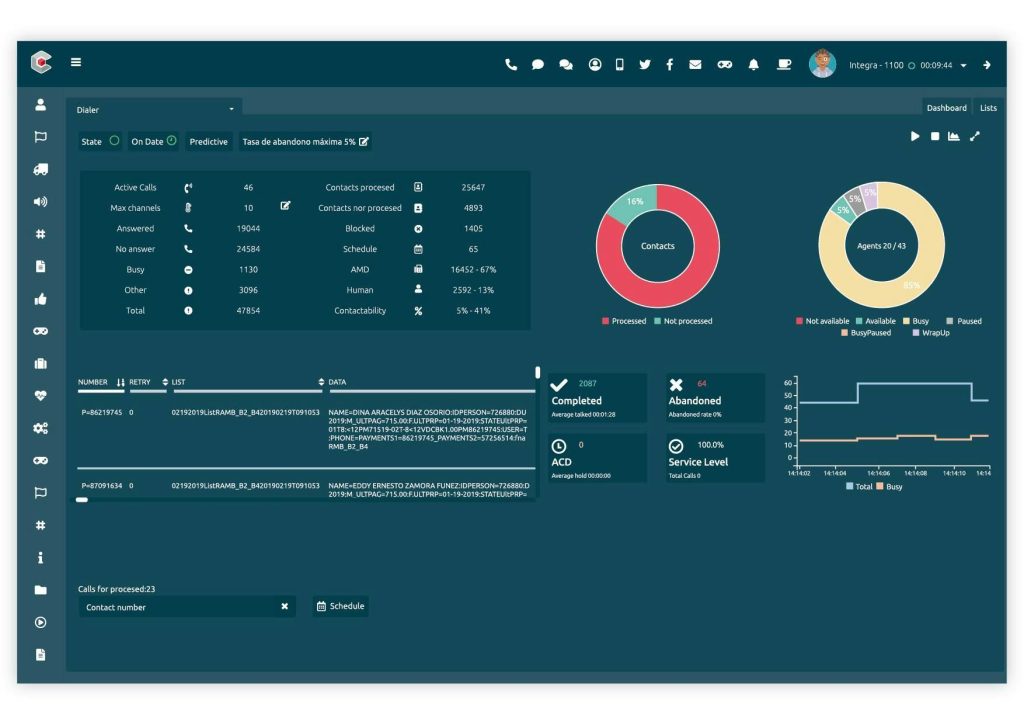
What Is a Predictive Dialer?
A predictive dialer is an automated calling system designed to manage outbound calls for sales and customer communication teams.
Instead of requiring an agent to manually dial every number, the system can automatically initiate calls based on configured campaigns and calling rules.
The system can also identify different call outcomes, such as:
• Answered calls
• Busy signals
• No answers
• Voicemail
• Unsuccessful connections
When a live call is identified, the system can connect the appropriate call to an available agent.
How Predictive Dialing Works
A predictive dialer follows a structured process.
First, the system works through the available contact list.
It then initiates calls according to the configured dialing strategy.
The system monitors the call outcomes and identifies whether the call has been answered, reached voicemail, received a busy signal, or received no answer.
When a suitable call is connected, the system can route it to an available agent.
This reduces the amount of manual dialing and waiting that agents have to handle.
Reducing Agent Idle Time
One of the common challenges in outbound calling is idle time.
An agent may finish one conversation and then spend several seconds or minutes manually dialing the next number and waiting for someone to answer.
A predictive dialer can automate much of this process.
The system can manage multiple outbound attempts according to its configured pacing logic. This helps keep agents connected to the calling workflow instead of requiring them to manage every dialing step manually.
Intelligent Lead Pacing
Calling too slowly can leave agents waiting for the next conversation.
Calling too aggressively can create unnecessary unanswered calls or situations where no agent is available.
Predictive dialing uses calling data and configured rules to manage the pace of outbound calls.
The goal is to maintain an efficient balance between call attempts and available agents.
The right configuration depends on factors such as agent availability, campaign size, connection rates, and business requirements.
Automatic Call Detection
Sales teams can spend significant time dealing with calls that do not result in a conversation.
These can include:
• Voicemail
• Busy signals
• No answers
• Unsuccessful connections
A predictive dialer can automatically detect these outcomes and process them according to the configured campaign rules.
This allows agents to focus their time on calls that require human interaction.
Live Call Analytics
Modern sales teams need visibility into their calling activity.
Call analytics can provide information that helps managers understand campaign performance and agent activity.
Depending on the system configuration, businesses can monitor information such as:
• Call volume
• Connection rates
• Agent activity
• Call outcomes
• Campaign performance
• Calling patterns
This information can help managers identify operational issues and make informed adjustments to their calling strategies.
Supporting Sales Teams
Predictive dialers can be useful for businesses that rely heavily on outbound communication.
Examples include:
• Lead generation teams
• Sales departments
• Customer outreach teams
• Financial services organizations
• Real estate companies
• Automotive businesses
• Education organizations
The technology can support different calling workflows depending on how the business manages its campaigns.
Predictive Dialers and CRM Systems
Many sales organizations already use CRM platforms to manage leads and customer information.
A predictive dialer can work alongside existing business systems when the required integrations are available.
This can help connect calling activity with the broader sales workflow.
For example, a sales team may use its CRM to manage lead information while the dialer manages outbound calling activity.
When these systems work together, teams can reduce manual processes and keep communication activity connected to customer records.
Why Call Quality Still Matters
Automation alone does not guarantee a successful calling operation.
The underlying telecom infrastructure also plays an important role.
Call quality, network stability, routing, and reliability can all affect the communication experience.
For businesses handling high volumes of calls, these factors become especially important.
A predictive dialer should therefore be considered as part of a broader communication infrastructure rather than as an isolated tool.
Choosing a Predictive Dialer
Before selecting a predictive dialer, businesses should consider their operational requirements.
Important factors include:
• Expected call volume
• Number of agents
• Campaign size
• Call pacing requirements
• Call analytics
• CRM integration
• Call outcome detection
• Reporting requirements
• Telecom infrastructure
• Scalability
Businesses should also evaluate how the dialer will fit into their existing communication workflow.
Predictive Dialer Solutions from Voxqor
Voxqor provides a Predictive Dialer Suite designed for businesses that depend on outbound calling.
The platform focuses on intelligent lead pacing, live call analytics, and automatic detection of voicemail, busy signals, and no-answer calls.
Voxqor also provides other telecom and cloud communication services, including Hosted PBX, Toll-Free Origination, and Wholesale Voice Termination. These services allow businesses to build communication infrastructure around their specific operational requirements.
Building a More Efficient Calling Operation
A successful outbound calling operation requires more than a contact list and a team of agents.
Businesses need a structured process for managing calls, monitoring activity, handling unsuccessful connections, and maintaining reliable voice infrastructure.
Predictive dialing can automate many repetitive parts of this workflow while giving managers greater visibility into calling activity.
The result is a communication environment where agents can spend more of their working time on actual customer conversations.
Conclusion
Predictive dialers can help sales teams manage outbound campaigns more efficiently by automating call initiation, identifying common call outcomes, and connecting suitable calls with available agents.
For businesses with high outbound call volumes, the technology can become an important part of their communication infrastructure.
The right configuration depends on your team size, calling volume, campaign requirements, integrations, and telecom environment.